Global Higher Education – A Reflection of International Relations

Looking for courses abroad? Choose the right course for you at leading universities abroad! These are popular lines you might have come across in an advertisement you spotted; neatly aligned above or below a paragraph on a social media page. Have you wondered how the migration of students from the parent country to a country abroad could impact the relations between the two countries? Read ahead to know more.

The movement of students for higher education across countries and cultures is a common and popular phenomenon. According to the reports published in 2009 by the OECD, i.e the Organisation for Economic Cooperation and Development, 3.7 million students belonging to the tertiary level studied outside their home country in 2010 alone. Colleges and universities world wide have realised the value of foreign language acquisition and appreciating cultures.

Image Source: wellbo.com

Institutions of various natures – private or public; for profit or non-profit; two-year or four-year; have developed their franchises or extended their institutions offshore. To add on to this, institutions are also collaborating or linking up with other institutions abroad (dual degrees, collaborative research projects, joint degrees).

Image Source: Gyfcat.com

Just like the expansion of higher education in terms of its dimensions and purposes, diplomacy too has seen an expansion, including its practice. Post World War II, the parameters of diplomacy have expanded significantly, leading to the inclusion of ‘public diplomacy’. Public diplomacy is a term that covers various actors and actions that engage in social, cultural and educational relations among nations across the world.

Image Source: philipmartin.info


Nations tend to achieve ‘soft’ power through diplomatic efforts and programmes. Soft power in comparison to hard power uses a gentler approach but is by no means less effective. Public diplomacy has been further developed through higher education; for example the Fulbright Program in the US. Not only has the Fulbright Program reduced the gap between the nations and the people, it has been able to foster a mutual understanding.

Image Source: livingwatermicrofinance.org

However in the academic world, researchers contemplate whether the effort to establish a global higher education system by institutions offers equal benefits to all those partnering the responsibility and investment. Are the final decisions taken in the system by the stronger power? (Is this a case of good actions being informed by mixed intentions? The answers to these questions are not easy. However, maintaining transparency and emphasising on decentralisation of power; consistent balance checks are necessary in ensuring the institutions attain the global aims.

Image Source: digitalspy.com
Image Source: GifImage.net

Limitations the institutions face, especially when they are reflecting the presence of a parent institution overseas is that they have to adhere to the national laws and develop awareness of the local customs so that it is reflected in the institution; they are able to negotiate with the local communities around them. For smooth functioning, it is very essential that these negotiations are conducted formally; both parties develop protocols and make promises, expectations very clear.

Image Source: gyfcat.com

Below is a video on the Internalisation of Higher Education by former UK Prime Minister Tony Blair. The video offers interesting insights on reasons for internalisation; the impact and nature.

References:
Lane, J (2012) What is Higher Education’s Role in International Relations?. The Chronicle of Higher Education. Retrieved from: https://www.chronicle.com/blogs/worldwise/what-is-higher-educations-role-in-international-relations/29208



10 Ways Education Promotes International Peace

In a society whose growth expands globally, the mutual survival of its citizens is through education. Education provides exposure and helps a person realise and understand what peace, harmony and development are. It is with the assistance of democratic values that humankind, since evolution has given rise to organized structures in society. However,the ulterior motives of humankind to make survival stronger, have dominated occasionally over the democratic concerns. This has also lead to a quick depletion of democratic values which has lead citizens of various nations to reflect on the survival of democracy in the future.

Despite these existing concerns, education is generally contemplated to be a solution to the war, conflict and violence to sustain global peace, harmony and development, which will ultimately lead to the survival of humankind.
The following are the top ten ways Education contributes in sustaining and promotes international peace.

1. Education increases Confidence and Hope.
Confucius, way back in 500 BC had linked education, confidence, hope and peace together; it was a chain. Education would develop confidence, a confident person would feel hopeful of the future, which would then result in positivity – thus bringing about peace. Gaining knowledge certainly helps a person become more confident as it brings about a sense of accomplishment and removes fear in the mind.

Image Source: giphy.com

2. Education encourages Independent Thinking
Education is able to promote independent thinking as it exposes people to new ideas. It allows them to consider new perspectives rather than blindly following what others around them are doing. Thus independent thinking would be less likely to join a group that preaches extreme ideas!

Image Source: giphy.com

3. Education develops Problem Solving Skills
Education challenges people to think logically – either to analyse a piece of literature, solve a math problem or understand the importance of a social event. When blended with independent thinking, the development of problem solving skills, the person would rather engage in innovation and creation than destruction and violence.

Image Source: giphy.com

4. Education develops Communication Skills
Through education, learners are exposed to various kinds of expression and are often encouraged to share their ideas and opinions. Communication is the key to solving conflict, primarily. By providing learners with quality education, facilitators are empowering learners to express their opinions and aspirations; rather than expanding the existing conflict.


5. Education provides Opportunities
Education empowers learners by making them employable; enhancing and developing their career and ensuring they receive their desired incentives. Earlier, when there was a lack of availability of education; becoming a pilot or a doctor was an unattainable dream. But today, it is all possible. With the strengthening of their careers, communities are able to support and uplift their families.

Image Source: giphy.com

6. Education reduces Poverty
Poverty causes an individual to feel insecure, uncomfortable; not valued, malnourished and fearful. These feelings can escalate and turn into anger, which can further escalate into violence. Education, especially when blended with vocational training, can reduce poverty. If poverty was reduced, so would violence.

Image Source: giphy.com

7. Education increases the Involvement of Individuals in Politics
Educated citizens are likely to support governments and extend their support and services to help achieve the common goals of the government and their own. This would inevitably lead into a government that has equal representation. Equal representation – leading to equal economic growth would ensure security of different communities and make them less vulnerable to violence.

Image Source: giphy.com

8. Education reduces support to terrorism and militancy
Education allows individuals to understand the consequences of violence and destruction; provides them with alternative solutions and ways they would respond to an issue or conflict instead. Once an individual is educated; through word of mouth, the individual is sure to share these ideas with others too; creating a chain of positive intellectual growth.

Image Source: giphy.com

9. Education develops Empathy and Tolerance
By exposing learners to perspectives of communities and individuals across the globe, learners develop a sense of empathy by being able to reason decisions, judgements and actions. They are able to respect diversity and sentiment, as they are now exposed to knowledge on cultures across continents.

Image Source: giphy.com

10. Education increases Respect
At a micro level, education helps the learner cultivate respect for their teacher and peers. However, this slowly extends to other people they meet in their day to day life. Education empowers them to tackle stress, respect arguments of opposing ideals and conduct themselves in a social environment.

Through education, I wish you peace and joy.

References:
Read, P (2012) Education for Peace. Routledge Publications. New York.

Below is a stellar video on learning to live in peace, together through global education.

Organic Gardens as Teaching Tools: A Case from Uruguay

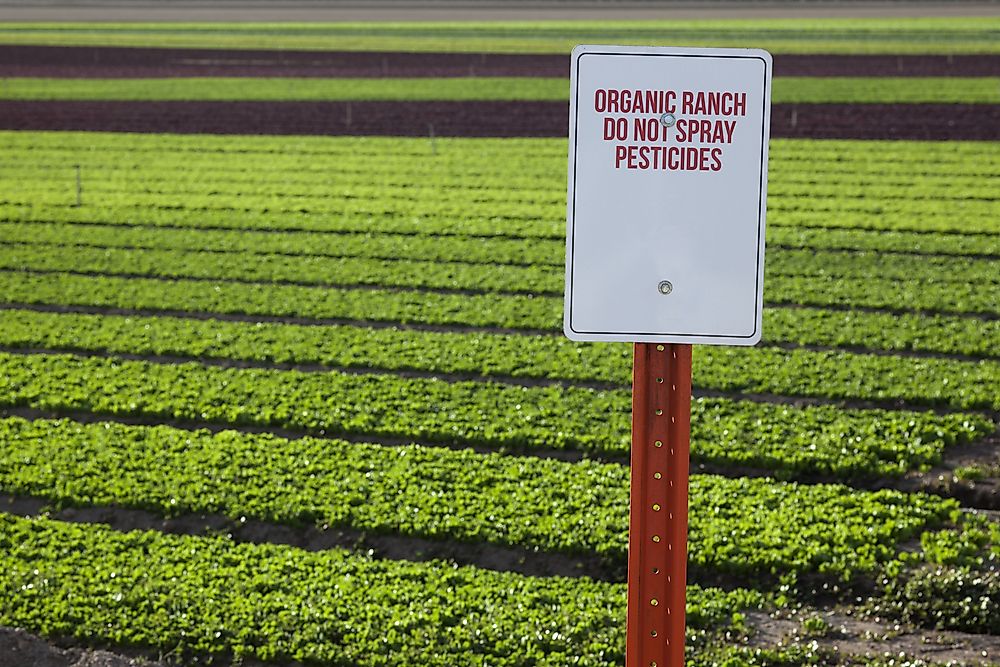
Through education, efforts are being made to allow humankind to have access to the knowledge, skills and values necessary to built a sustainable future. This also includes exposing the learners to key sustainable development issues and empowering them to find solutions for the same.

In a district in Uruguay, a project was developed to change and improve nutrition by the Achievements Foundation, in 2012. It initially began on a piece of land of 6 hectares. The Foundation transformed it into an educational-agro-ecological centre, along with multifunctional spaces, a library and a laboratory inside it. Trees were planted inside the centre, along with the establishment of a nursery with a space to cultivate efficient microorganisms.

Image Source: UNESCO

The pilot project proved to be so efficient that in 2016, the Foundation expanded its base to other districts as well, to schools – where the project would be driven by students who had initiated the original project and the teachers would run it.

Since very few students have kitchen gardens at home, this constant exposure to organic gardens is exposing students to nutrition and developing their knowledge about it. This has empowered students by making them the prime advocates on the food they choose to eat. The Foundation has turned its attention into expanding the project and establishing itself in many more schools. It also makes an effort in linking private and public stakeholders.

Where do the resources come from?
The fertilisers used in cultivation of the vegetables in these organic farms are organic waste. 100 percent rain water is harvested which is used for irrigation and breed fish which eat mosquito larvae; control algae. The fish are fed the remains of the vegetables and fertilise the water with their waste in return.
The students form a cooperative amongst themselves. They distribute responsibilities related to the farm amongst themselves including commercialising the farm.


However, this project has been scheduled in 2019. A plan for the next years is in process. Attempts to spread the project across the country are ongoing.

References:
(2019) Using organic gardens as teaching tools transforms a whole community in Uruguay. UNESCO Report 2018.

Below is a video that offers reflection on organic farming and research in Uruguay.

Reviewing : Singapore’s holistic approach to teacher development by Oon-Seng Tan

Source: The Phi Delta Kappan, Vol. 94, No. 3 (November 2012), pp. 76-77
Published by: Phi Delta Kappa International
URL: http://www.jstor.org/stable/41763685

In the backdrop of possibilities of battle between Singapore and the US, Tan describes the evolution of the Singaporean Education System.
It traces its origins to a time when Singapore was poverty stricken, facing depletion of natural resources and ethnic issues. Post independence in 1965, the leaders realised the need to rebuild the country’s government and economy. The need to develop human resources was strongly felt. Tan discusses how finding world class educators was the top most priority of the educational planners. He reasons that it was this investment in competent educators that placed Singapore education system as the fourth best. The article points towards three factors that set apart the world’s top ten schools. They are finding the right teachers; the institution’s effort in ensuring they are trained and monitoring that the institution is delivering its best. There is a need for training force to be rigorously selected, developed and evaluated.

Image Source: The Straits Times

The US has acknowledged the importance of ensuring good teachers are employed, but successive steps after implementation seem to be missing. Singapore has been successful in making teaching an attractive career by providing remuneration similar to those of civil servants in Singapore. The Ministry of Education in Singapore also provides scholarships for higher education for future teachers. Tan brings out the need for improvement of teacher expertise in subject content. Teachers have to master content; for the students to be able to do so. The author describes the commitment of the Singapore government towards schools; it invests $45 million on schools. Tan concludes by expressing his idea on how teacher evaluation must be inclusive in the life cycle of the teacher; not an end. America needs to keep in mind this holistic development, which it hasn’t been successful in achieving, in comparison to Singapore.

Image Source: VVOB Cambodia

The ideas put forward by this article can be implemented in policies on teacher recruitment, evaluation and remuneration. Since the ideas put forward are not simply idealistic but have been practised, the ideas are an inspiration to developing and underdeveloped countries that are striving to make their mark in the global forum. A clear link between educational development and the country’s growth has been established which empowers education as a discipline as well. The need to evaluate and train teachers on a cyclical basis is highlighted; which have already been implemented by countries like Malaysia. The study sheds light on necessity of state investment in schools.

While nations attempt to develop their educational systems, importance is given to better infrastructure or enrolments. This however fails to be a long term; reliable solution because teacher education; evaluation and remuneration is ignored. This article is able to strongly argue why teacher education needs to be given utmost priority with evidence of its success in Singapore; also by contrasting it with the education system in America. The article also acknowledges that in order to have highly qualified teachers working in schools, it is essential that they are paid well too. The author questions why it is a foreign idea teacher jobs are attractive careers. The author is able to establish a link between the sustainable development of Singapore with its education system. Professional development of the school is essential, along with educational renewal. (Goodlad, 1998)

References :

Goodlad, J I. (1994). ​Educational Renewal: Better Teachers, Better Schools​. California: Jossey-Bass

The video below helps provide an insight into the day of a teacher in Singapore.


Learning from the Leading School Education Systems in the World

As time passes, we are gradually accepting that schools around the world will find providing opportunities for learners to learn everything required for the future challenging. The demand for quality, equitable learning is higher than never before. Schools today face two main challenges. One, how to make schools conducive for learners to learn new types of skills and knowledge and two, how to make this possible despite the socioeconomic backgrounds the students come from. It is then developing countries look towards successful, efficient education systems across the world. (Sahlberg, 2010)

Image Source: giphy.com

The following are the countries were ranked as the 11 best school education systems in the world by the World Economic Forum in 2017. The countries were assessed on the basis of infrastructure, primary education and macro-economic environment. (Williams, 2017)

  • Japan: Japan has been one of the highly performing countries in terms of literacy, Science and Mathematics. Students are supposed to go through 6 years of primary school. 3 years of junior high school, followed by 3 years of high school. After this, student have the choice to decide which university they wish to join. Though high school is not compulsory, enrolment rates are 98 percent. The success of their education system is surprising because they contribute only 3.5 percent of its GDP. Lot of importance is given to extracurricular activities; which is referred to as shadow education. However, this kind of education is not a part of the formal education students receive.
Image Source: ifrc.org
  • Barbados: The success of the education system here has been reasoned to the Barbados government investing heavily on education, which has led to a 98 percent literacy rate. The government pays the entire cost of education at primary and secondary levels; along with an extra tertiary level. The government also provides textbooks. Primary education begins early, at the age of 4 and goes on till the age of 11. Schools are equipped with facilities; though they show sign of age.
Image Source: nationnews.com
  • New Zealand: There are no different types of schools in the primary stage of education in New Zealand. In the secondary stage, there are three kinds – state schools, state integrated schools and private schools. State and state integrated school’s education consists of 12 percent of the students available, private schools get to keep 3 percent only. However, the country faces the challenge of dropping education quality while quantity remains high and bullying in schools.
Image Source: franktonschool.ac.nz
  • Estonia: The government in Estonia aims to create conditions that enhance personality; quality of families, development of minorities and the quality of life in general through education. The government also tries to help connect Estonian citizens to the global world through education. The country spends 4 percent of its GDP on education. Along with education being divided into stages – i.e. basic, secondary and higher secondary, education in Estonia is also divided into general, vocational and hobby education. In basic school, they judge students on a five-point scale that ranges from very good, good, satisfactory, poor and weak. Numbers or grades are not used. Local governments fund the schools; they manage school transport and ensure that meals are provided as well.
Image Source: bbc.com
  • Ireland: The growth of the country’s economy has directly impacted the success of the education system in Ireland. The country has three levels of education – primary, secondary and higher; which is also called as third level or tertiary education. The country also has a well-functioning pre-primary level of education. The State instructs compulsory education from the age of 6 to 16. The Constitution however, does not make it mandatory for the parents to send their students to schools. 97 percent of schools are under the control of the church.
Image Source: Independent.ie
  • Singapore: This has provided subsidies in state government education and government assisted private education. Education has been made mandatory for children except children with disabilities; also, it a criminal offence for parents if they fail to admit their ward in school. Primary education starts at the age of 7. Primary education is free for Singapore citizens; only miscellaneous costs are collected. The country also has a Gifted Education Programme. They are further trained in higher order thinking and creative thinking.
Image Source: Honeycombers Singapore
  • Belgium: There are three types of schools in Belgium on the basis of ownership – community owned schools, subsidised public schools and subsidised free schools.  The schools are regulated and financed by the three main communities in Belgium, they are the Flemish, French and German. The federal government plays a small role; it only decided the age for mandatory schooling and indirectly finances the communities. Private schools function to serve international communities, mostly.
Image Source: whickhamparochial.org
  • Switzerland: In Switzerland, the authority to take decisions is given to the cantons, this in turn makes the education system in Switzerland very diverse. The Constitution states that primary education is mandatory and sets the foundation for the same. Students usually attend two years of kindergarten before joining primary school. Students are separated based on their abilities at the end of primary school, teachers and parents can make recommendations for the same. Only 5 percent of the country attends private schools.
Image Source: swissinfo.com
  • Finland: The education system also includes day care programmes, pre-school, comprehensive school and post compulsory secondary education and ends with adult education. The comprehensive school is state funded and does not have any kind of selection, tracking or categorising students. In areas where transport is not accessible, the state also provides transport. A lot of importance is given to special schools as well. The success of Finland’s education system has also lead it into achieving a high HDI of 0.993 as of 2003. The education system also ensures time to time training of teachers and provides schools with internal autonomy. Students are graded on their performance in school on scale of 4 to 10, but these grades are not reflected on report cards or certificates. There is no concept of failing. The schools provide a number of social entitlements like health care and free lunch.
Image Source: thisisFindland.com

After discussing the various highly ranked education systems across the world, one understands the amount of inspiration we could take from the education systems around us. Certain characteristics each of these countries have are similar to what India as a country has, for example diverse cultures and terrains. The following are policies adopted by each of the countries that we could learn from:

  • Japan – To value and inculcating genuine interest and passion for learning among students. Extra-curricular activities must be encouraged and invested upon.
  • Barbados – To invest better on education; how the economic growth of the country has an impact on the education system; making it important to plan the country’s economy systematically.
  • New Zealand – To allow private schools to keep only a percentage of the student population; in situations where privatisation of education cannot be done away with, this seems like an executable solution.
  • Estonia –  To give importance to the student’s overall holistic development along with academic growth; this ensures that the student is able to utilise the education or knowledge received wisely and efficiently.
  • Ireland – To innovate new categories of schools; this helps create schools on the basis of different purposes to education amongst students. This can be implemented in middle school or secondary school.
  • Singapore – To create stricter laws on education; this helps increase a sense of accountability both, amongst parents and teachers. A sense of community involvement in education is also developed.
  • Belgium – To create an education system that can accommodate diversity. However, this a policy India already strives to do, but the model of education in this country can help us seal loopholes.
  • Switzerland – To provide autonomy to local governments in terms of handling their education systems; this helps the local government creates rules/programmes in a way that can cater to the demands of their demarcated area, to make pre-primary education important as well.
  • Finland – To establish stages of education for age groups that do not fit into the target age group that is educated; include children below the age of 5 into pre-primary or create day care centres, enforce a stronger adult education base, to provide free transport to schools funded by the state as well, train teachers better, give schools internal autonomy; this will in a way make schools more responsible, to realise that grades/ marks are not accurate markers to deter a student’s true potential.
Image Source: